Science / Explained
The Drug LandscapeArticle 1 of 4

History of Insulin: How did we get from insulin to Ozempic?

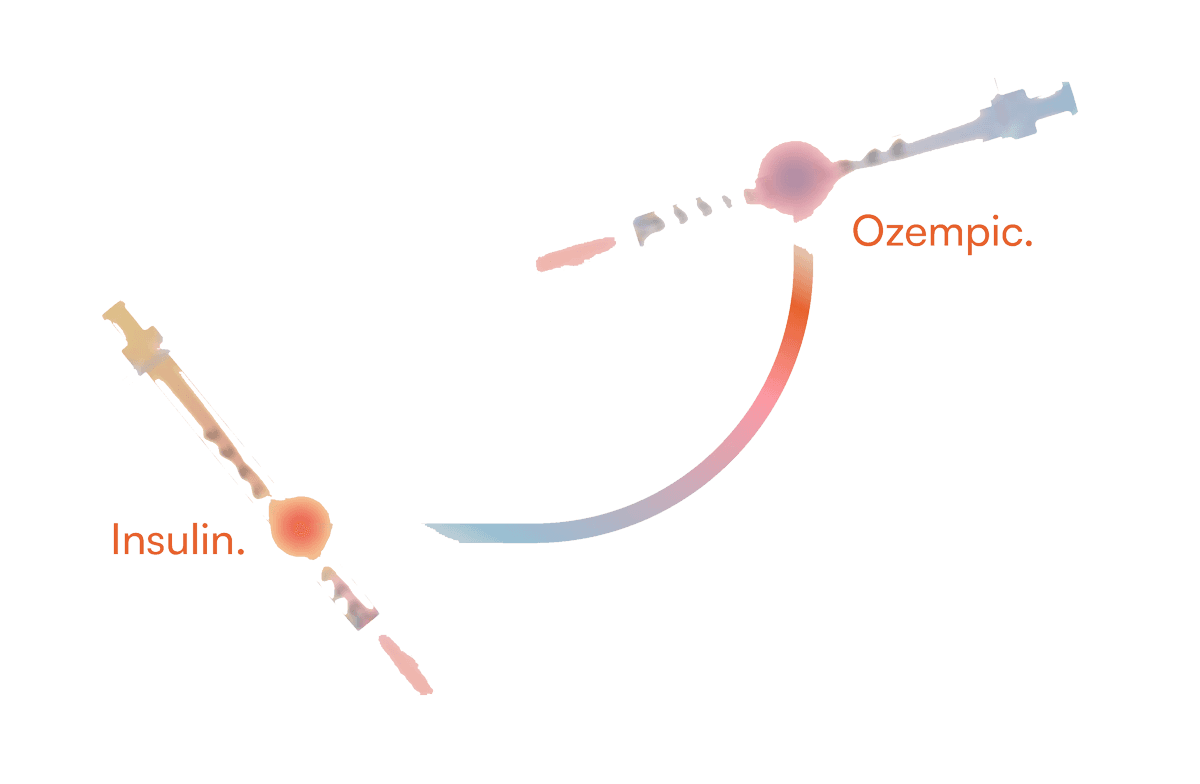
History of insulin explains the Ozempic era better than hype does: identify a useful signal, map its biology, then engineer delivery and stability so the same pathway becomes medically usable.

How does insulin history connect to Ozempic?

Insulin proved that a peptide signal already used by the body could be supplied in a medical context with life-changing effect.

What repeated pattern defines peptide-drug development?

Later peptide drugs followed the same pattern: identify a signal, clarify what it does, and engineer a way to stabilize or deliver it in a usable form.

GLP-1 medicines sit inside that lineage. They are newer tools built on familiar design logic, not a disconnected breakthrough.

Why does this history matter for current decisions?

It keeps the category frame accurate. Individual products differ, but the scientific method behind them stays consistent across generations.

One More Thing

Frederick Banting sold the insulin patent to the University of Toronto for one dollar. He said: "Insulin does not belong to me. It belongs to the world."

By October 1923, manufacturers shipped commercial insulin globally. That one-dollar patent has since generated hundreds of billions in pharmaceutical revenue across the industry. Every GLP-1 drug on the market today traces its scientific lineage to that decision. Banting did not ask what insulin was worth. He asked who it belonged to. His answer shaped a century of medicine.

Next
Are peptide drugs FDA approved?
Related articles

Are peptide drugs FDA approved?

Are peptide drugs FDA approved? Yes. Peptide drugs are already established across multiple therapeutic areas, including metabolism, endocrinology, and pain management.

Read more

Peptide Therapy History: A Century of Peptides from the First Patient to GLP-1

From a dying boy in 1921 to a $1 patent that belonged to the world to a Gila monster's saliva. The hundred-year story of how scientists learned to turn the body's signals into medicine.

Read more

What is GLP-1?

What is GLP-1? GLP-1 is a peptide signal the gut releases after a meal. It helps coordinate insulin release, slows gastric emptying, and changes how the brain processes hunger, fullness, and food reward.

Read more

Semaglutide vs Tirzepatide: How are Ozempic, Mounjaro, and Retatrutide different?

Semaglutide vs tirzepatide comparisons usually start with weight loss, but pathway design is the real difference. Each generation adds one more signal target, from single-pathway GLP-1 drugs to triple-agonist retatrutide.

Read more

What Are Peptides? Your Body Runs on 7,000 Peptide Signals

A deep dive into how short chains of amino acids regulate hunger, blood sugar, pain, immunity, and tissue repair across the entire body.

Read more
Keep building trust

Move from the science to the proof, source, and practical questions.

Science next

The GLP-1 Highway

Keep the explanation moving with the next evidence-led Science article.

Keep learning

Science next

Semaglutide vs Tirzepatide: How are Ozempic, Mounjaro, and Retatrutide different?

Keep the explanation moving with the next evidence-led Science article.

Keep learning

Science next

Are peptide drugs FDA approved?

Keep the explanation moving with the next evidence-led Science article.

Keep learning

Science next

The Difference Between Brand, Compound, and Source

Keep the explanation moving with the next evidence-led Science article.

Keep learning
References3 sources
  1. Wang, L., et al. · 2022
    Therapeutic peptides: current applications and future directions.
    Signal Transduction and Targeted Therapy, 7
  2. Holst, J.J. · 2007
    The physiology of glucagon-like peptide 1.
    Physiological Reviews, 87(4)
  3. Knudsen, L.B., & Lau, J. · 2019
    The Discovery and Development of Liraglutide and Semaglutide.
    Frontiers in Endocrinology, 10

Disclaimer. This article is for educational purposes only and does not constitute medical advice. Peptide signals and their therapeutic applications are complex and context-dependent.