Science / Explained
Myths, Read Against the EvidenceArticle 3 of 27

Do GLP-1 peptides cause erectile dysfunction?

THE STUDY

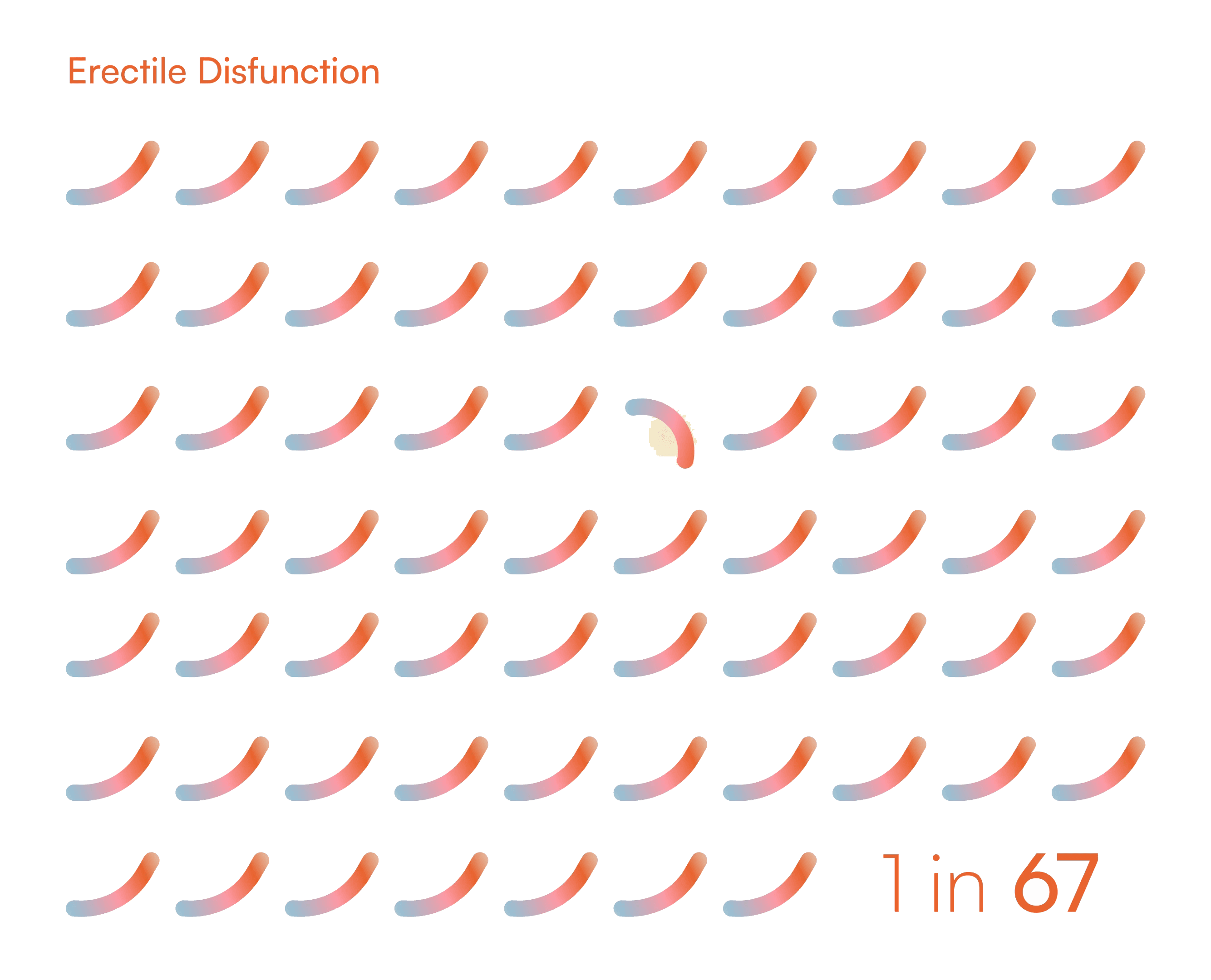
A 2024 study compared about 3,000 men in two groups: half were on semaglutide for weight loss; half were not. New erectile dysfunction showed up in about 1 in 67 men in the semaglutide group, versus about 1 in 300 in the comparison group.

The peptide group's rate was roughly four-and-a-half times higher. Both rates are small.

THE LIMITS

The study was observational, which means it can flag a signal but can't prove the peptide caused it. Men who are obese and non-diabetic carry their own cardiovascular and metabolic risk factors that the study can't fully control for.

Erectile function is shaped by sleep, hormones, vascular health, stress, and medications. A weight-loss intervention moves several of those at once, in different directions.

What this means

New changes in sexual function after starting any medication are worth tracking and discussing with a clinician.

The signal exists but isn't settled. New sexual changes after starting any peptide are worth tracking.

Previous
Do GLP-1 peptides damage teeth?
Next
Do GLP-1 peptides lower libido?
Related myths

Do GLP-1 peptides lower libido?

There's no clear mechanism in the literature that says the peptide lowers libido. The signal hasn't been studied directly in a trial.

Read more

Do GLP-1 peptides cause hair loss?

Yes, some people lose more hair on these peptides. Not many. And the hair grows back.

Read more

Do GLP-1 peptides cause blindness?

Rare, but real. The eye-disease research shows a small signal involving an optic-nerve condition, and the absolute rates are low.

Read more
Keep building trust

Move from the science to the proof, source, and practical questions.

Science next

What is GLP-1?

Keep the explanation moving with the next evidence-led Science article.

Keep learning

Science next

Are all peptide sources the same? COAs, testing, and traceability

Keep the explanation moving with the next evidence-led Science article.

Keep learning

Science next

Does a certificate of analysis prove a peptide is trustworthy?

Keep the explanation moving with the next evidence-led Science article.

Keep learning

Practical questions

FAQ

Use the FAQ for logistics, safety boundaries, and common buyer questions.

Read the FAQ
References1 sources
  1. See source line · 2026
    Able et al. 2024, *International Journal of Impotence Research* (PMID 38778151).
    Source line — see article body

Disclaimer. This article is for educational purposes only and does not constitute medical advice. Peptide signals and their therapeutic applications are complex and context-dependent.